The Beginning - Money Laundering and Disruption
Liberty Shared, originally Liberty Asia, was established from my experience in the investment and banking industry post-911. During the 2000s, the U.S. government made pursuing terrorist financing an absolute priority for all global financial institutions. Identifying such illicit financing, or money laundering, meant new infrastructure, practices and governance models. We all needed to identify the ultimate source and direction of funds received, used and sent. If there was anything suspicious it must be reported. As a head of legal and compliance across Asia Pacific for a global investment business, these issues were part of my daily responsibilities.
My first insight during that period, which was followed by the financial crash, was why couldn’t we used this expanding global infrastructure to disrupt human and wildlife trafficking. The second insight was that understanding trafficking, supply chains and financing as complex adaptive systems meant that by disrupting the money, the rest of the system would adapt either by ceasing activity or continuing at greater risk to itself thereby making the illicit activities more vulnerable. Liberty Shared would be disruptive but eventually would also have to be more.
In 2011, I founded Liberty Asia with the primary purpose of gathering actionable information from the ground which could be passed to financial institutions and law enforcement to disrupt and terminate human and wildlife trafficking. Initially, we looked at the palm oil industry, fishing and mining industries which had an intersection with both human and wildlife trafficking.
Our first interactions were with HSBC and Standard Chartered Bank, and we would get to know their financial intelligence units very well as the years past. Ultimately by the 2020s, we would work with many global and regional financial institutions, and were the only NGO to contribute to the Financial Action Taskforce’s (the global body) guidances on human trafficking and on wildlife trafficking.
Here is a paper by the Ann Toews of Princeton University’s Innovations for Successful Societies about our work on money laundering and trafficking disruption.
A complex adaptive systems approach
The strategy was always to drive changes in behaviour which would favour the well-being of vulnerable populations, whether human or other than humans. Complex adaptive systems thinking means we accept interdependency of stakeholders/actors in the system, the boundaries of the system are difficult to define, relationships are non-linear and disproportionate in reaction and new stakeholders and behaviours emerge. In other words, staekholders must adapt to changing circumstances. What I wanted was adaptation of behaviours, such as a improved corporate governance across an industry, better practices in civil society and greater enforcement in justice.
Here is my strategy presentation from 2014 showing the system and Liberty Shared’s position, role and programmes (we had developed a secure evidence knowledge sharing system at that time on Alfresco more on that later).
Global Hotline and Google Ideas Award
In 2012, Liberty Asia won a Google Ideas Award led by Polaris (U.S.) and with La Strada focusing on Europe, both very established anti-human trafficking organizations compared to our early stages. Thank you to Matt Friedman for pushing for the award.
A global hotline was a very flawed idea from technical, management, governance, legal/regulatory and funding perspectives. But also, and perhaps most importantly, from a victim care perspective. However, as Nassim Taleb repeatedly emphasizes, there is not only a lot to learn from failure, more so that success where causality is often masked, but it is crucial to learn from failure.
At that time, Polaris ran the U.S. national hotline, La Strada was well positioned in Europe, at least a federated and regulated union. Asia was, as it still is today, a region of differing levels of economic development, legal and regulatory frameworks, infrastructure, ideological positions and political allegiances.
A hotline across the region simply fell at the first regulatory hurdle but moreover the technology and cost, this was pre-cloud cheap telecommunications, was also immediately prohibitive.
All that said, I was recommended to a young Sri Lankan telco engineer, Gary Withanage (supported by John Alam), who joined us and managed through imagination and hard work to connect partner organizations in Cambodia, Hong Kong, Malaysia and Thailand. For a while, we had a regional hotline.
While helping rescue and assist victims was the primary goal, the underlying objective of the hotline was to gather data about victims of human trafficking and understand their vulnerability.
The hotline was never global and Asia never connected to the U.S.. Our funding was roughly 10% of the total granted and insufficient to for the medium term, however we did find a way to keep it going for a few years.
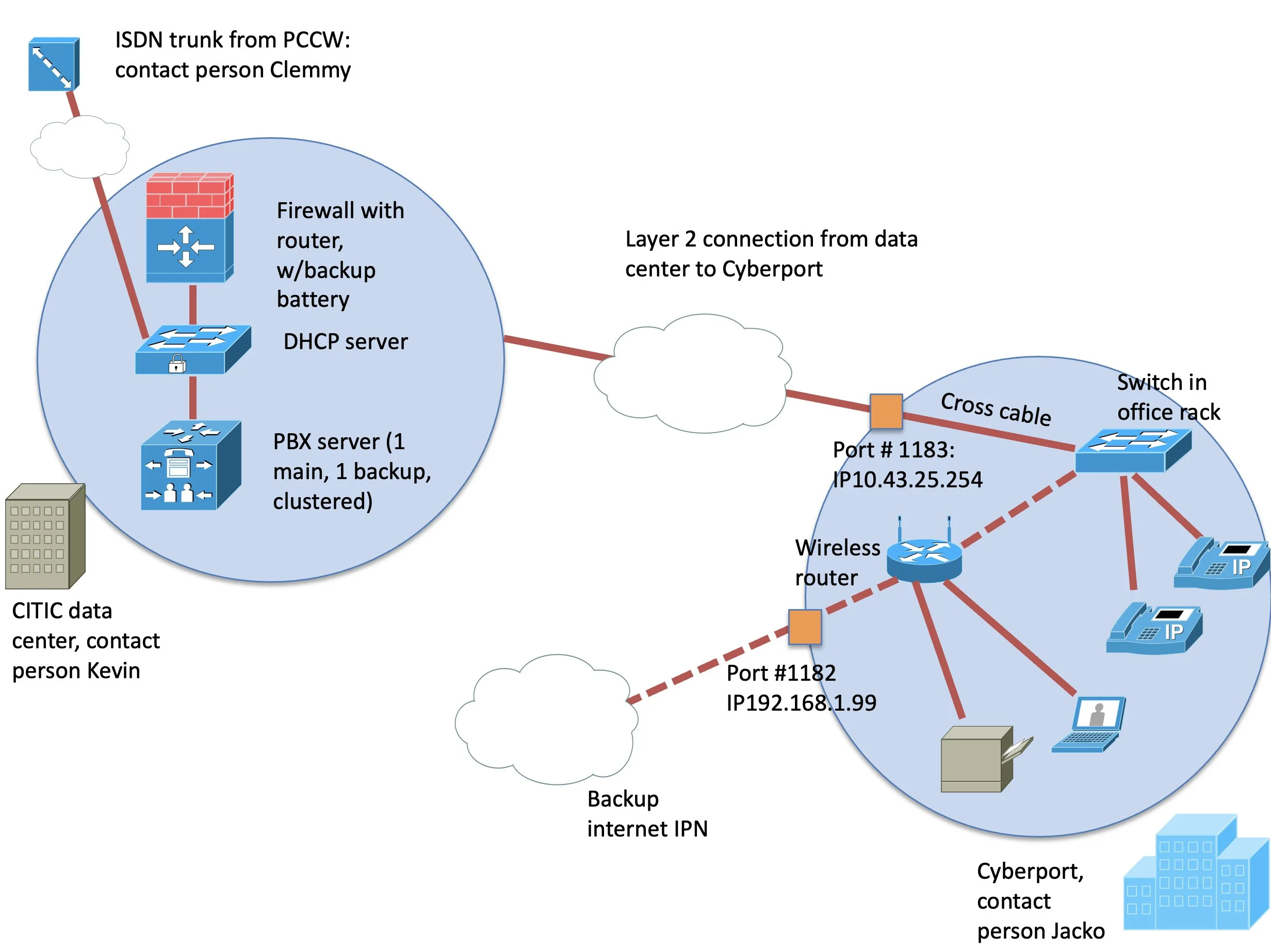
Victim Case Management System (VCMS)
The struggle with the Global Hotline project raised an important question - how can structured information be collected about victims at scale?
Xinyi Duan, our CTO and data scientist, designed victim case management systems using a CRM tool applied for a U.S. Dept. of State grant which to our shock, and the bemusement of the official who visited us, we were awarded in 2014. The official who visited us related that they had a “bet” in the office that we would never build it. It is still being used by NGOs today!
Xinyi selected Salesforce as the CRM tool on which to build it. There are now other more flexible apps availble but as some have discovered, when it comes to reliability, security and support a well-resourced service providers can be better.
For the next seven years, the programme was very lucky to have some extremely smart and dedicated people that constantly improved the platform, provided continuous individual and organization support and training, and so pushing it forward very quickly from the doubtful beginnings to the most widely used victim case data management tool. Huge thank you to Frank Nankivell, Sam Savage, Prue Allen, Jessica Clayton, Sophie Otiende, Liva Sreeharan, Preston Johnson, Monica Puthawong, Jennifer Penrose, Marc Lucas, Kirra Hughes, Clara Samuels and Tameem Al-Talabani.
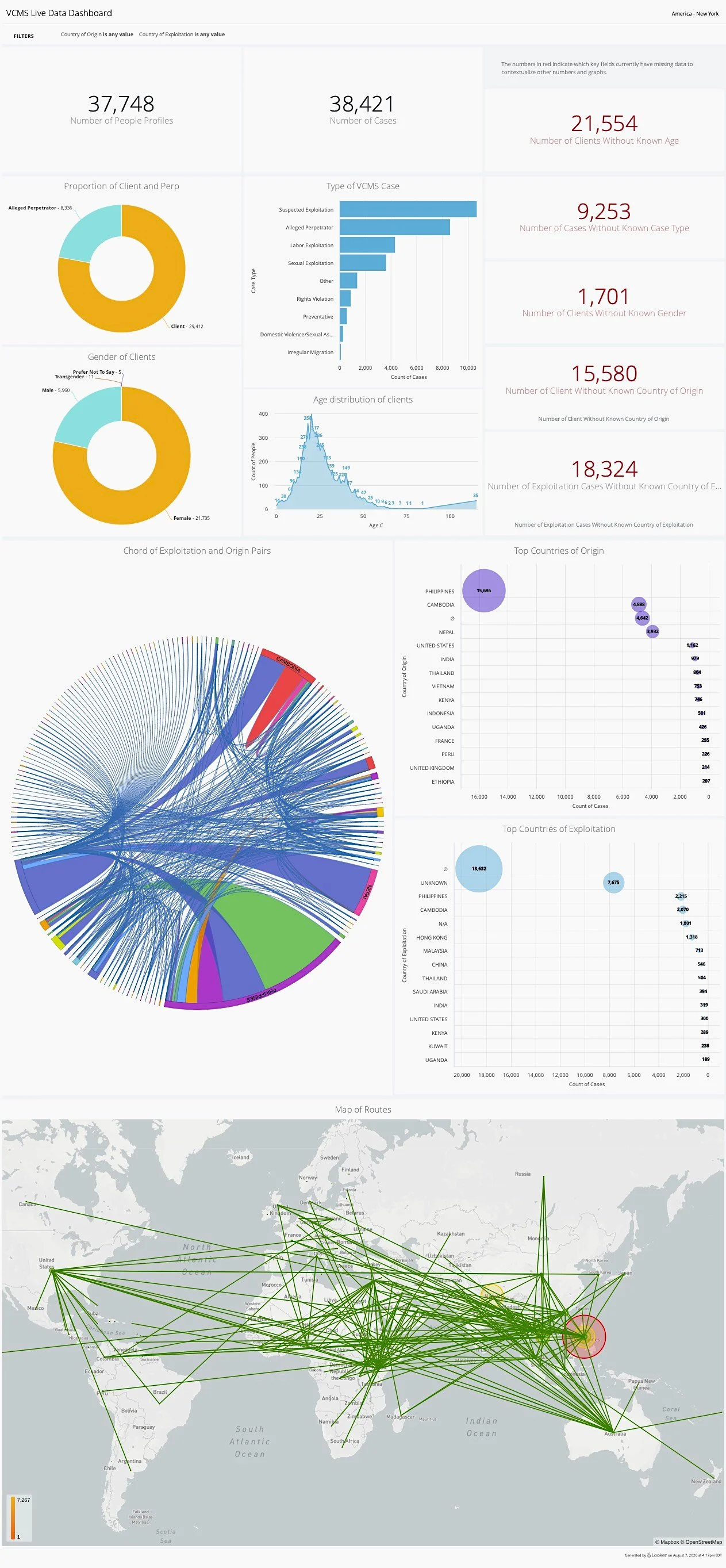
A summary of VCMS use and data in 2020
So what is VCMS?
The first rule of the nursing profession is “if it’s not written down, it didn’t happen”. Record keeping is absolutely essential for treatment and care provision. And from a justice perspective, if perpetrators of harm are to be held accountable and pay compensation then accurate records and history are vital as evidence.
VCMS was designed and developed to offer NGOs a free case data management application using the leading technology, Salesforce, which in fact still remains the top choice for CRM tools today. The platform was configured to have bespoke elements for the individual NGO’s needs, and its organizational culture and administrative practices. From a behavioural perspective, various configurations were in place to urge the NGO staff to ensure specific data was included, such as required fields and VCMS was mobile compatible at a time when that was rare.
The technology design and development was ongoing until mobiles, form building and cloud storage caught up to our ambition. However, by 2021, after working with over 130 NGOs across more than 26 countries, we found that the technology was not the primary problem hindering success.
After eight years, we reviewed the data in the system, our client experiences and spoke with NGO case workers and it was clear that organizational culture and administrative practices were the constraint to improvement and better data quality. A big part of this is what is called the Nonprofit Starvation Cycle - donors do not want to fund overheads. This is hardly news but if the overhead is better administration, which is exactly what it is, for better record keeping of victims trauma and information about perpetrators then it is a vicious cycle to the bottom. To support vulnerable people properly and find them justice then record keeping and administration is essential; if it’s not written down, then it didn’t happen.
VCMS is still used by some of the leading NGOs in the trafficking field and our design was a model on which others have developed and it is now part of the Praeveni Global project. The U.S. Dept of State was a huge supporter of this project, commissioning it at the beginning. A massive thank you to Ambassador (ret.) Luis C. deBaca and Heather Panton, White House Special Advisor for Human Trafficking | Human Trafficking Czar; USAID, Winrock and Katie Henke and Sara Piazzano; Porticus; and GIZ.
Freedom Collaborative
If actionable ground truth about victims, and their perpetrators, could not be gathered from hotlines and calls then we would have to build a different platform coordinating.
I remembered Steven Pinker’s point in The Better Angels of Our Nature about the launch of the telephone. Technology is regularly redefined by social use and the initial idea that the telelphone would be strictly a business tool gave way to much greater use as a means of furthering existing social connections of family and friends. In short, people wanted to speak to people they already knew and they used the telephone changing it and their own lives in the process.
If we were to build a platform where people would share experience, ideas and information, then the users must do so because they trusted each other and wanted to act together. The only problem was that we had been repeatedly told NGOs had “sharp elbows” and would not act together. A person in government, who I would come to know, and respect, much more later told me “such a platform was very unlikely to work.”
In 2014, I had been fortunate to meet Helen Sworn who was thinking of an online NGO community, was similarly struggling, but had made more progress. She was happy for us to work with her to see if we could progress what she had achieved with our aims, design and build. In 2017, Helen would launch the Asia Regional Anti-Trafficking Conference.
That year our CTO, Xinyi Duan, identified an talented Russian coder, Uri Zolotko, who built the first version on Ruby on Rails then on Heroku. For our first launch, Freedom Collaborative had a news posting forum, NGO registration and data infrastructure and thanks to Helen an increasing library of the hundreds of documents she had collected. Helen was also crucial to gathering many of the early adopters. Learning from Pinker’s lesson about social connection and technology adoption, the early version of the platform needed a full-time Helen Sworn.
Early 2015, Xinyi and I met Julia Macher in Phnom Penh. Julia started as product manager, became programme director in 2017, and then in late 2021, once I had established and moved Freedom Collaborative into its own 501c3 entity, she became CEO with her own board (whom I admit to inviting and was the initial chairperson) to work with her. At that time, Freedom Collaborative had over 5000 users from the anti-human trafficking community across 116 countries, had run 65 webinars with hundreds of panelist from the community, produced some of the first consistent and regular data on trafficking routes and published a range of co-created reports.
Back in 2015 though, Julia’s initial task was to get on the road, meet the community, learn, build users and get feedback. She did this very well but we needed to have people and organizations collaborate and we identified a number of activities that could be done as a community.
First, we published a newsletter deliberately containing stories of the achievements of members of the community;
Second, we initiated work on joint reports;
Third, webinars and panels; and
Fourth, joint data collection of trafficking routes conducted in person in country.
We had two basic internal rules: (i) Liberty Shared was not the story so unless needed we did not feature; and (ii) we tried to translate all content into as many languages as we could afford.
Data collection
Seeing the struggles of effective record keeping and data collection on VCMS, I decided Freedom Collaborative was perhaps a more effective platform to gather a simpler but still structured dataset on victim experiences.
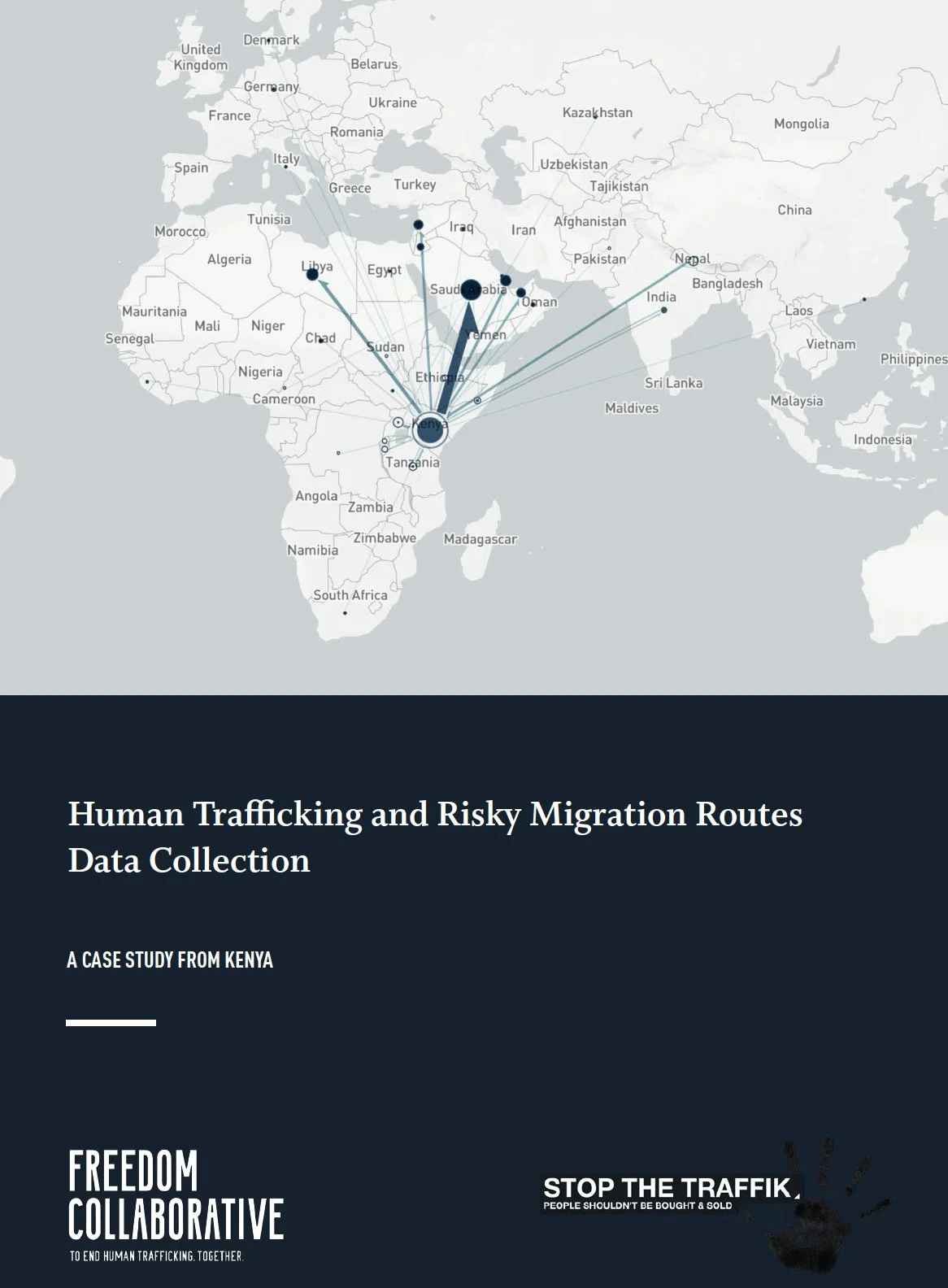
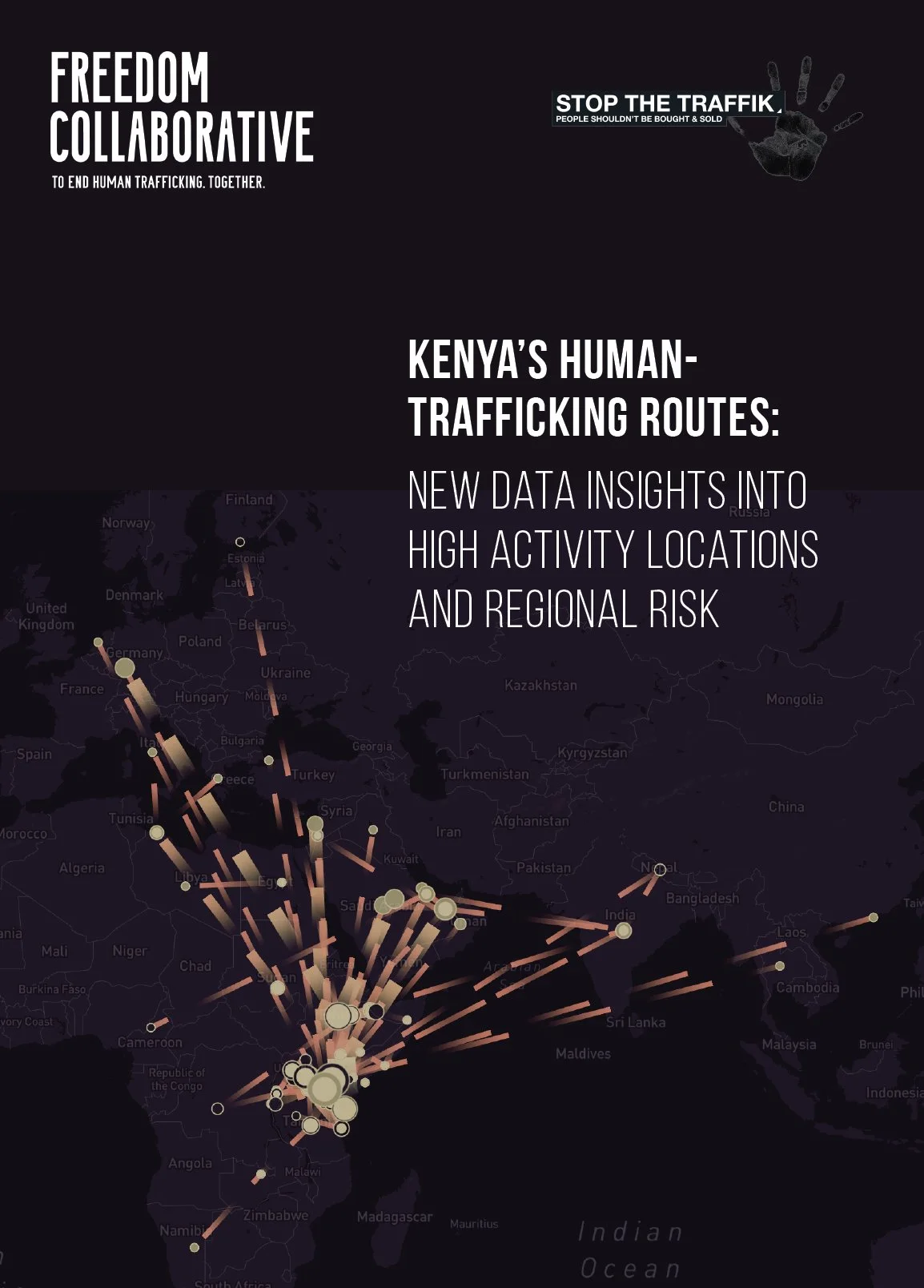
The result was the first in-person data sharing meeting which we held in Kenya. Members of local NGOs shared data and their vast expertise from which we created the first mapping document. Obviously, this is now done easily with cloud-based data sharing apps and easy visualization tools. Trust was hugely important!
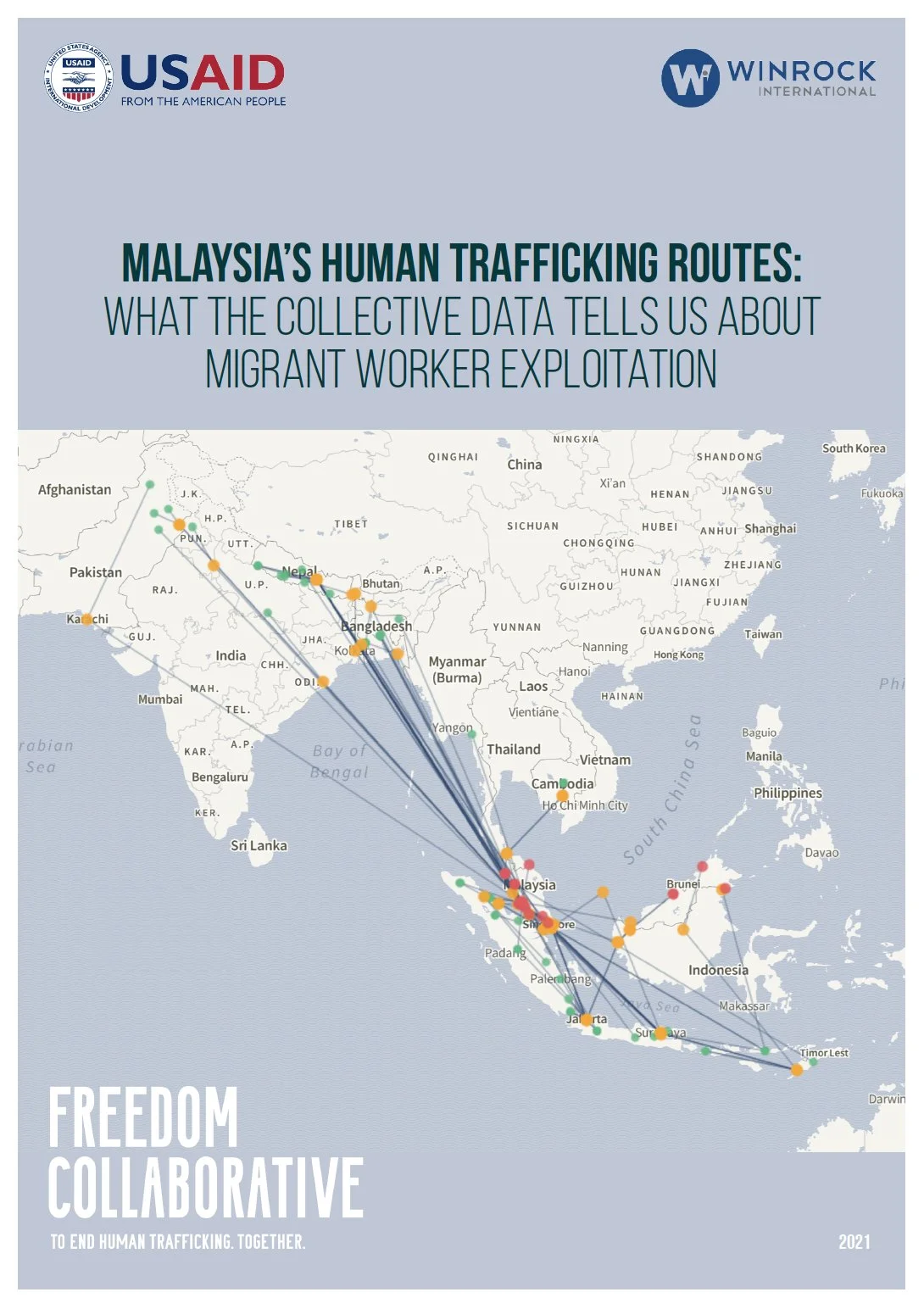
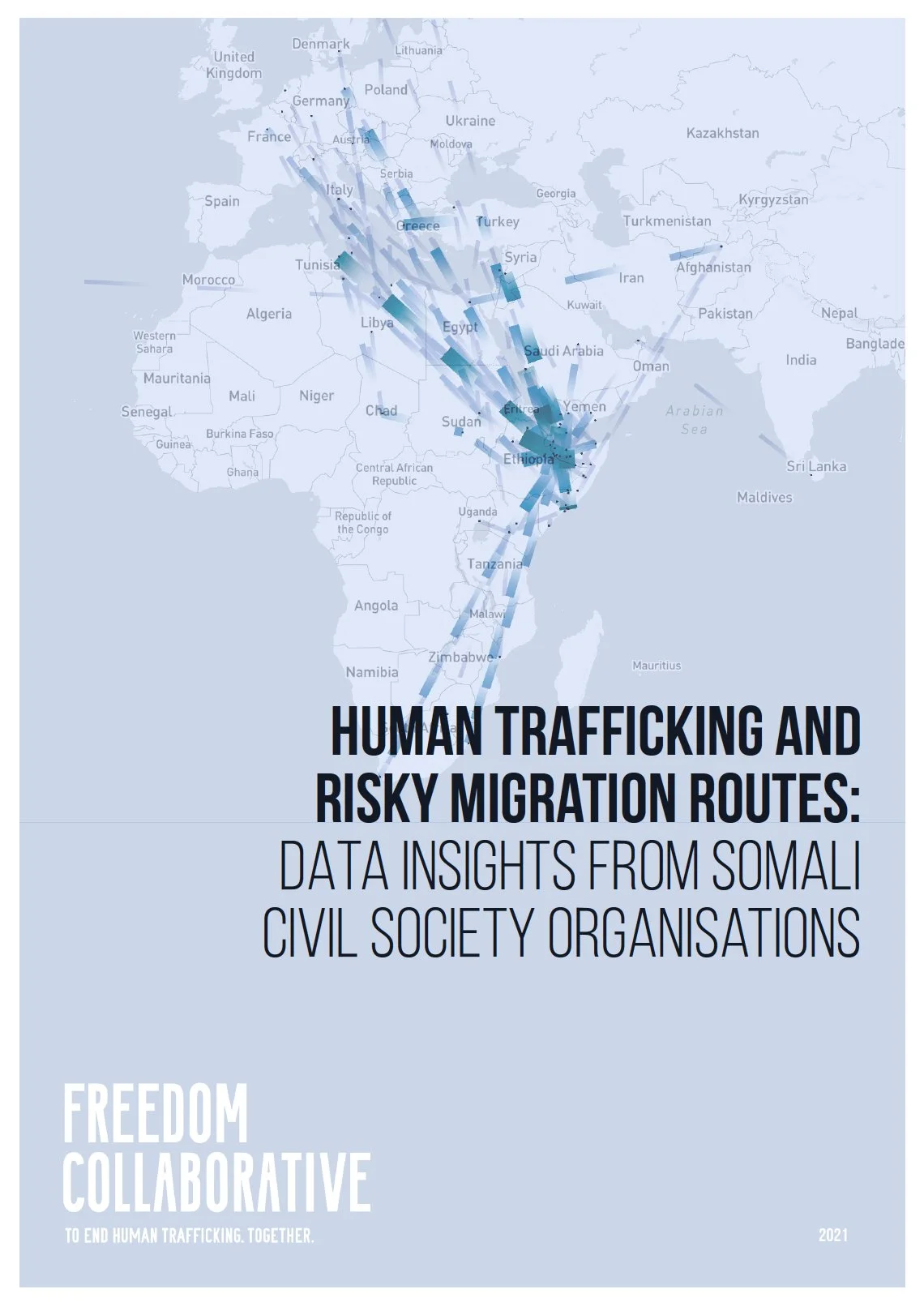
Some of the coproduced knowledge we published under Freedom Collaborative (images link to documents)…